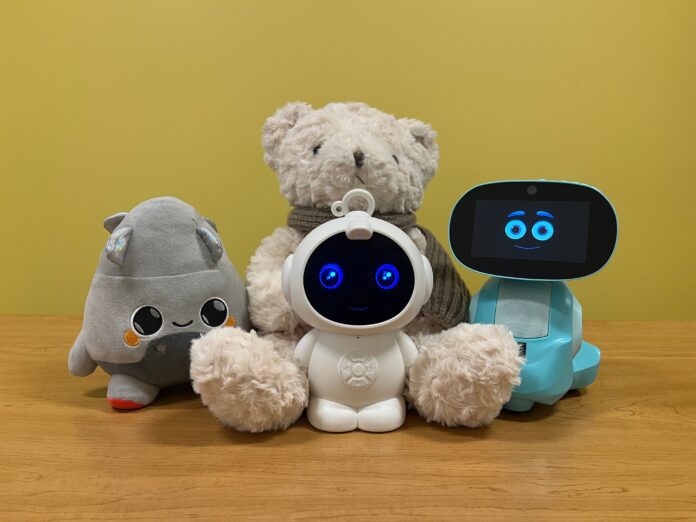
China, long one of the world’s largest toy manufacturers, is now embracing artificial intelligence as a natural next step. Under the leadership of Xi Jinping, the government is actively encouraging companies and consumers to integrate AI into business and everyday life, aiming to turn China into a global AI powerhouse, according to CNBC.
Haivivi, the company behind the AI-powered plush toy CocoMate, is just one of around 1,500 firms operating in China’s AI toy sector, a market valued at approximately $4 billion.
Read also: A critical moment for AI self-training is getting close according to Anthropic’s chief scientist
Innovation in this space is rapidly expanding. Chengdu-based startup Chongker has developed an AI companion cat designed to provide emotional comfort. The toy uses voice recognition and cloud-based memory to adapt its behavior to user preferences.
“Some people want the cat to be louder or cheekier, while others prefer a calm one. It learns what kind of behavior you like,” said Sean Xu, AI product director at Chongker.
The company also added a heartbeat simulation feature, activated after the toy is held for 10 seconds. According to Xu, the electronic pulse helps users feel calmer.
For those seeking a more energetic companion, the AI puppy Loona, developed by Keyi Tech, navigates homes using cameras and lasers. Its AI enables it to understand the layout of the house, recognize up to five family members, and respond to each individually.
However, concerns remain. A study by the Public Interest Research Group (PIRG) shows that the effects of AI-powered toys on young children are still poorly understood. Researchers found that some toys provided inappropriate or potentially harmful information and raised data privacy concerns.
“Many of these toys rely on complex language models. Sometimes they can say things that aren’t true,” explained technology consultant Tom van Dillen. In the case of Haivivi’s CocoMate toys, parents can view their children’s conversations with the AI toy on their phones, offering an added layer of oversight.
Photo: The Boston Globe