
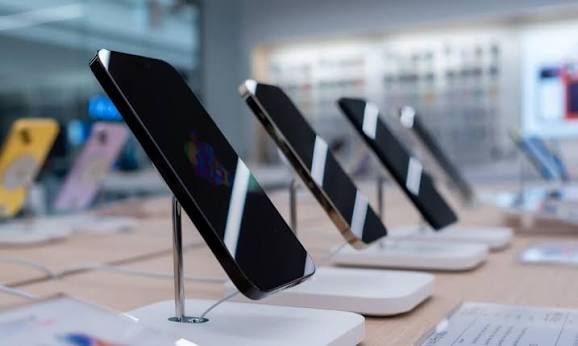
Apple reported record revenue for the April–June quarter, driven by strong iPhone and Mac sales, but investors reacted negatively after the company issued a weaker-than-expected outlook for the current quarter, according to EuroNews.
Although Apple exceeded Wall Street forecasts, concerns over slower future growth, rising component costs and supply constraints pushed the company’s shares lower in after-hours trading.
Record Results Driven by iPhone Sales
According to EuroNews, Apple generated $109.42 billion (€95.2 billion) in revenue during the quarter, up 16% from a year earlier.
Net profit rose 27% to $29.79 billion (€25.9 billion), while earnings reached $2.02 per share, comfortably ahead of analysts’ expectations of $1.89 per share, according to a FactSet survey.
Revenue from the iPhone increased 21.7% to a quarterly record of $54.25 billion (€47.2 billion), while Mac sales climbed 28.7% to $10.35 billion (€9 billion).
Outlook Weighs on Investor Sentiment
Despite the strong financial performance, Apple forecast revenue growth of 9% to 11% for the current quarter, below analysts’ expectations of around 12%, EuroNews reports.
The company also warned that rising memory chip costs and limited availability of advanced semiconductor manufacturing capacity—partly driven by growing demand for artificial intelligence infrastructure—could continue to pressure results.
Apple previously described the surge in memory demand as an “unprecedented challenge” for the consumer electronics industry and has already increased prices for selected Mac and iPad models, while analysts believe iPhone prices could also rise later this year.
Leadership Transition and Cost Pressures
Chief Executive Officer Tim Cook described the latest results as Apple’s strongest June quarter ever, highlighting double-digit growth across the iPhone, Mac and Services businesses.
The earnings announcement marks Cook’s final quarterly report as CEO before John Ternus assumes the role on 1 September.
According to EuroNews, analysts noted that Apple continues to generate strong cash flow without the massive AI infrastructure spending seen at many other major technology companies. However, they also warned that rising memory costs and the end of tariff-related refunds could weigh on profitability in the coming quarters.
Apple shares fell by as much as 8% in after-hours trading before recovering part of the decline.
Photo: iStore