
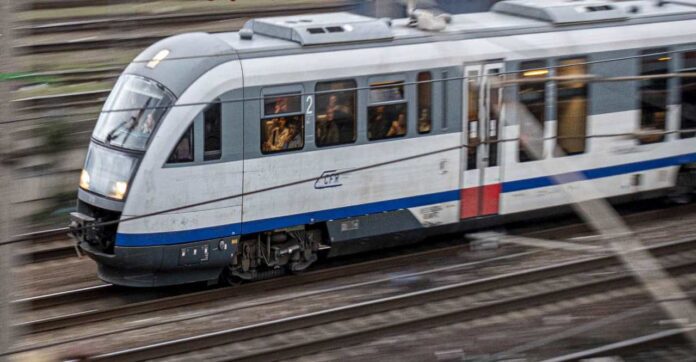
CFR has signed a RON 2.11 billion contract for the design and execution of modernization works on the Craiova–Drobeta Turnu Severin–Caransebeș railway line, a strategic project aimed at aligning infrastructure with European standards, improving safety, and boosting passenger and freight mobility, according to a statement cited by Agerpres.
Contract duration and funding
The winning bidder is a consortium led by IC Ictaş Inşaat Sanayi ve Ticaret Anonim Şirketi, together with Rotary Construcţii Mentenanţă SA. The total contract duration is 195 months, including 12 months for technical design, 60 months for construction, 120 months for the warranty period, and 3 months for post-acceptance activities.
Read also: Record investment: one of Bucharest’s “Henri Coandă” Airport runways set for full modernization
Project financing will come from non-reimbursable European funds through the Transport Programme 2021–2027, the state budget via the Ministry of Transport and Infrastructure, and other legally established funding sources, within approved annual public investment budgets.
Scope of works and technical objectives
The project includes modernization of the railway line in line with Technical Specifications for Interoperability, for single or double track electrified at 25 kV. It also covers the installation or rehabilitation of electronic and electrodynamic signaling systems in stations and along the route, as well as the implementation of the ERTMS Level 2 safety system. The maximum axle load will be increased to 22.5 tonnes.
The contract provides for train lengths of up to 740 meters in all stations, high platforms measuring 400 meters, and maintenance of the standard gauge of 1,435 mm. Works also include the rehabilitation of the Feneș and Tîmpa tunnels, widening of the Tîmpa tunnel to meet standard clearance requirements, and construction of two new tunnels: Poarta 2 (550 m) and Poarta 3 (305 m).
Additional works involve track geometry improvements, signaling and telecommunications upgrades, full electrification modernization at 25 kV/50 Hz, increased transit capacity, installation of noise-reduction solutions, and a maximum operating speed of 120 km/h.
Once completed, the project will bring the railway line into full compliance with EU technical standards, supporting infrastructure development and enhancing safety and mobility along this key transport corridor.
Photo: Economica